
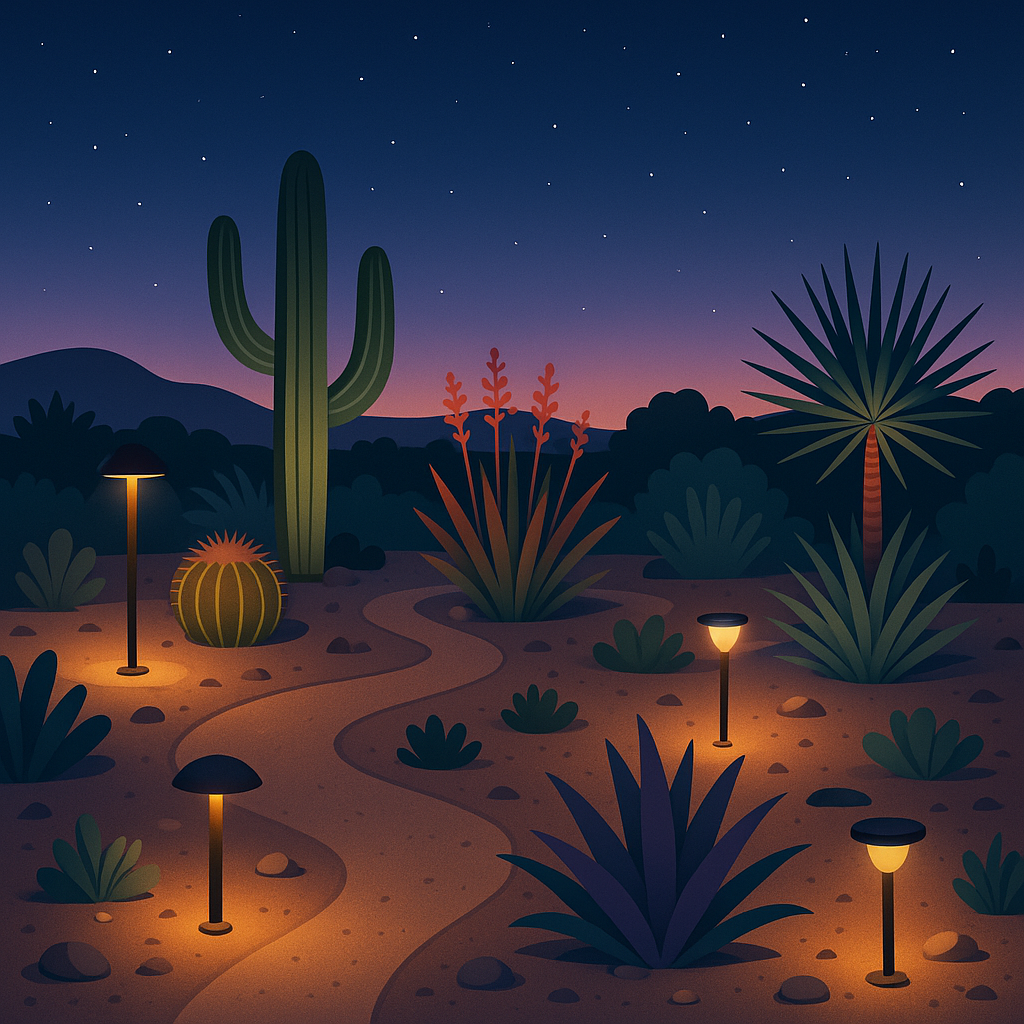
When comparing low-voltage LED and solar landscape lighting for durability in desert conditions, low-voltage LED lights tend to last longer and perform better overall. While both options have their merits, low-voltage LEDs are often more reliable due to their consistent energy source and robust construction.
- Low-voltage LEDs can last up to 50,000 hours.
- Solar lights may only last 3 to 5 years in harsh climates.
- LEDs are generally more energy-efficient than solar alternatives.
- Installation of LEDs can be more complex due to wiring.
- Solar lights can be easily installed without wiring.
What Are Low-Voltage LED Landscape Lights?
Low-voltage LED landscape lights operate on a lower voltage, making them safe and energy-efficient. Typically, they require a transformer to convert standard voltage down to safe levels, allowing for a wide range of lighting options in outdoor spaces. They are known for their longevity, efficiency, and minimal energy consumption.
Benefits of Low-Voltage LED Lighting in Desert Areas
Low-voltage LED lights are ideal for desert landscaping due to their durability and energy efficiency. They can withstand harsh weather conditions and provide consistent illumination without significant energy costs. Additionally, their long lifespan means fewer replacements, making them a cost-effective option in the long run.
What Are Solar Landscape Lights?
Solar landscape lights harness solar energy through photovoltaic panels to power LED bulbs. They are designed to charge during the day and illuminate at night, providing an eco-friendly lighting option. However, their performance can be affected by weather conditions and the amount of sunlight received daily.
Advantages of Solar Landscape Lighting
Solar lighting offers several advantages, particularly in remote areas where running electrical wiring can be challenging. They are easy to install, require no electricity, and reduce energy costs. Solar lights often come with built-in sensors that automatically turn the lights on at dusk and off at dawn.
Challenges of Solar Landscape Lighting in Desert Conditions
Despite their advantages, solar landscape lights face challenges in desert environments. Intense heat can cause batteries to degrade faster, reducing their lifespan. Additionally, during periods of little sunlight, such as in winter months, their performance can diminish significantly, resulting in less reliable illumination.
Comparison Table: Low-Voltage LED vs. Solar Landscape Lighting
| Feature | Low-Voltage LED | Solar |
|---|---|---|
| Lifespan | 25,000 – 50,000 hours | 3 – 5 years |
| Energy Efficiency | High | Moderate |
| Installation | Complex (requires wiring) | Easy (no wiring needed) |
| Performance in Heat | Excellent | Variable (battery degradation) |
| Cost | Higher initial cost | Lower initial cost |
Verdict: Which Is Better for Desert Landscaping?
For homeowners in desert regions, low-voltage LED lights are generally the better choice due to their longevity and energy efficiency. While solar lights offer easy installation and lower upfront costs, their performance can be inconsistent in extreme heat and prolonged sunlight deprivation. Ultimately, the decision should consider specific landscaping needs and budget constraints.
FAQ
What is the lifespan of low-voltage LED landscape lighting?
Low-voltage LED landscape lighting typically lasts between 25,000 to 50,000 hours, making it a durable choice for long-term use in various conditions, including desert environments.
How long do solar landscape lights last in the desert?
Solar landscape lights in the desert can last around 3 to 5 years, depending on the quality of the solar panel and battery, as well as the intensity of sunlight received.
Which is more energy-efficient: LED or solar landscape lighting?
LED landscape lighting is more energy-efficient as it consumes less power compared to solar lights, which rely on solar energy and can underperform in cloudy conditions.
Are low-voltage LED lights easier to install than solar lights?
Low-voltage LED lights require a bit more installation effort due to wiring, while solar lights are generally easier to set up since they don’t need wiring or external power sources.
What are the pros and cons of solar landscape lighting?
Pros of solar lighting include easy installation and no electricity costs. However, cons include variable brightness and shorter lifespan compared to low-voltage LED options, especially in extreme heat.