
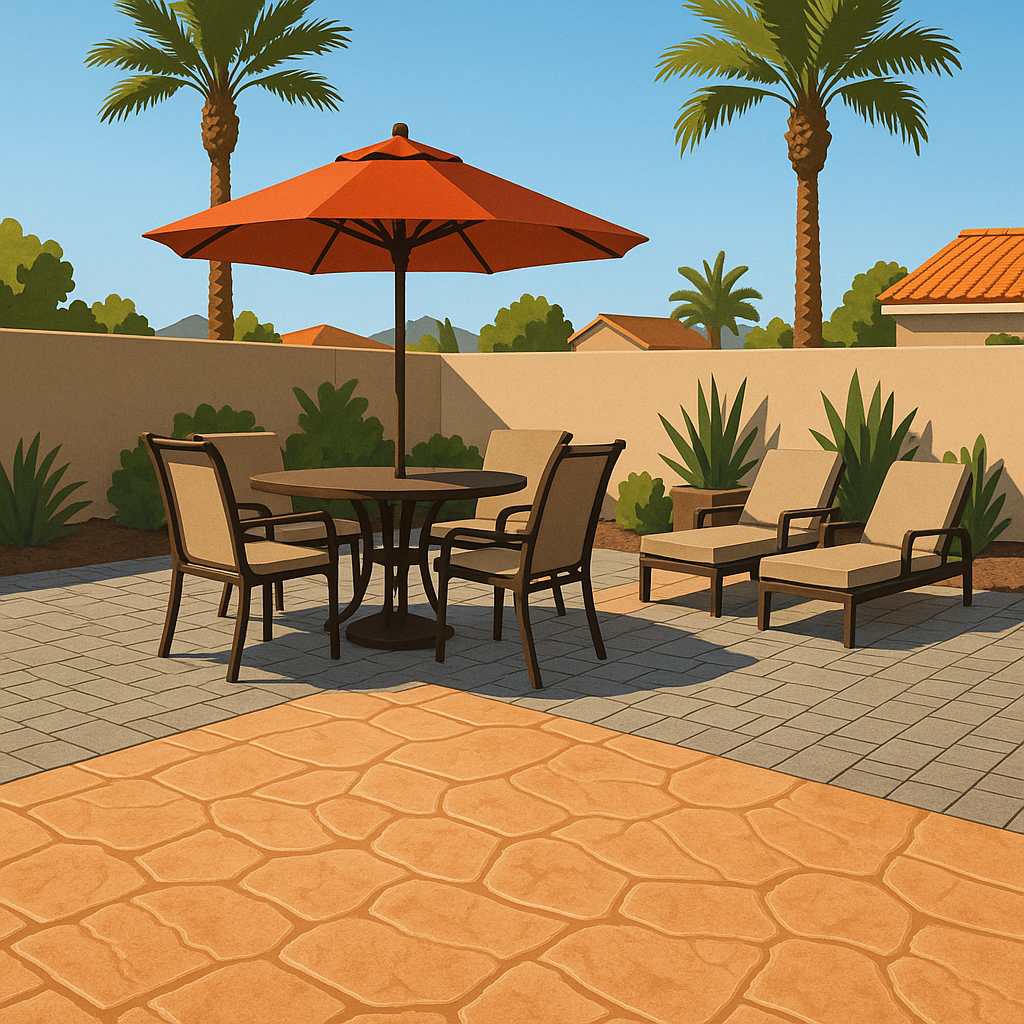
When it comes to choosing the right material for patios and driveways in Las Vegas, homeowners often debate between pavers and stamped concrete. Both materials have unique benefits and drawbacks that can significantly affect the aesthetics, durability, and overall cost of your outdoor space. Understanding these differences is crucial for making an informed decision.
- Pavers are typically more durable and easier to repair than stamped concrete.
- Stamped concrete offers a uniform look and potentially lower initial costs.
- Maintenance needs differ; pavers require joint filling, while stamped concrete needs resealing.
- Pavers remain cooler underfoot, making them ideal for hot climates like Las Vegas.
- Long-term costs can favor pavers despite higher initial installation costs.
What Are Pavers?
Pavers are individual stones or concrete units that are laid in patterns to create a sturdy surface for patios and driveways. They come in various materials, including brick, concrete, and natural stone, allowing for a range of aesthetic choices. One of the main advantages of pavers is their durability; they can withstand heavy traffic and are less prone to cracking compared to poured concrete.
What Is Stamped Concrete?
Stamped concrete is a technique where concrete is poured as a single slab and then stamped with patterns that mimic the look of natural stone or brick. This method allows for a uniform appearance across large areas, which can be visually appealing. However, while stamped concrete can be less expensive to install, it has its limitations in terms of repair and longevity.
Cost Comparison of Pavers vs. Stamped Concrete
When comparing costs, stamped concrete often has a lower initial installation price. However, it’s essential to consider long-term expenses, such as maintenance and repairs. Pavers may require a higher upfront investment but can save money in the long run due to their durability and ease of replacement.
Maintenance Needs for Pavers and Stamped Concrete
Maintenance is a crucial factor in the longevity of both materials. Pavers typically need periodic sealing and joint maintenance, while stamped concrete requires resealing every few years to protect against cracking. If a paver becomes damaged, it can be replaced individually, whereas stamped concrete repairs can involve significant work and expense.
Durability and Longevity
In terms of durability, pavers are often considered superior, lasting 20-25 years or more with proper care. Stamped concrete usually has a shorter lifespan of about 10-15 years before substantial repairs are needed. This durability makes pavers a preferable choice for high-traffic areas in Las Vegas.
Verdict: Which Is Best for Your Las Vegas Outdoor Space?
Ultimately, the decision between pavers and stamped concrete will depend on your specific needs and preferences. If you prioritize aesthetics and a cooler surface, pavers may be the better option for your Las Vegas patio or driveway. However, if you are looking for a more cost-effective initial investment and a uniform look, stamped concrete could be suitable, keeping in mind its maintenance and lifespan considerations.
FAQ
What are the main differences between pavers and stamped concrete?
Pavers are individual stones or bricks that interlock, while stamped concrete is a single slab that mimics the look of stone. Pavers are more durable and easier to repair, whereas stamped concrete offers a uniform appearance.
Which option is more cost-effective for patios in Las Vegas?
Typically, stamped concrete is less expensive to install than pavers. However, long-term costs should also consider maintenance and repairs, which may favor pavers due to their durability.
How do maintenance requirements differ for pavers and stamped concrete?
Pavers generally require periodic sealing and joint filling, while stamped concrete needs resealing every few years to prevent cracking. Pavers are easier to replace if damaged, making them potentially less costly over time.
Which is better for a hot climate like Las Vegas?
Pavers tend to be a better choice for hot climates due to their ability to stay cooler underfoot compared to stamped concrete, which can absorb heat and become uncomfortably warm.
How long do pavers and stamped concrete last?
Pavers can last 20-25 years or longer with proper maintenance, while stamped concrete typically lasts around 10-15 years before needing significant repairs or resurfacing.