
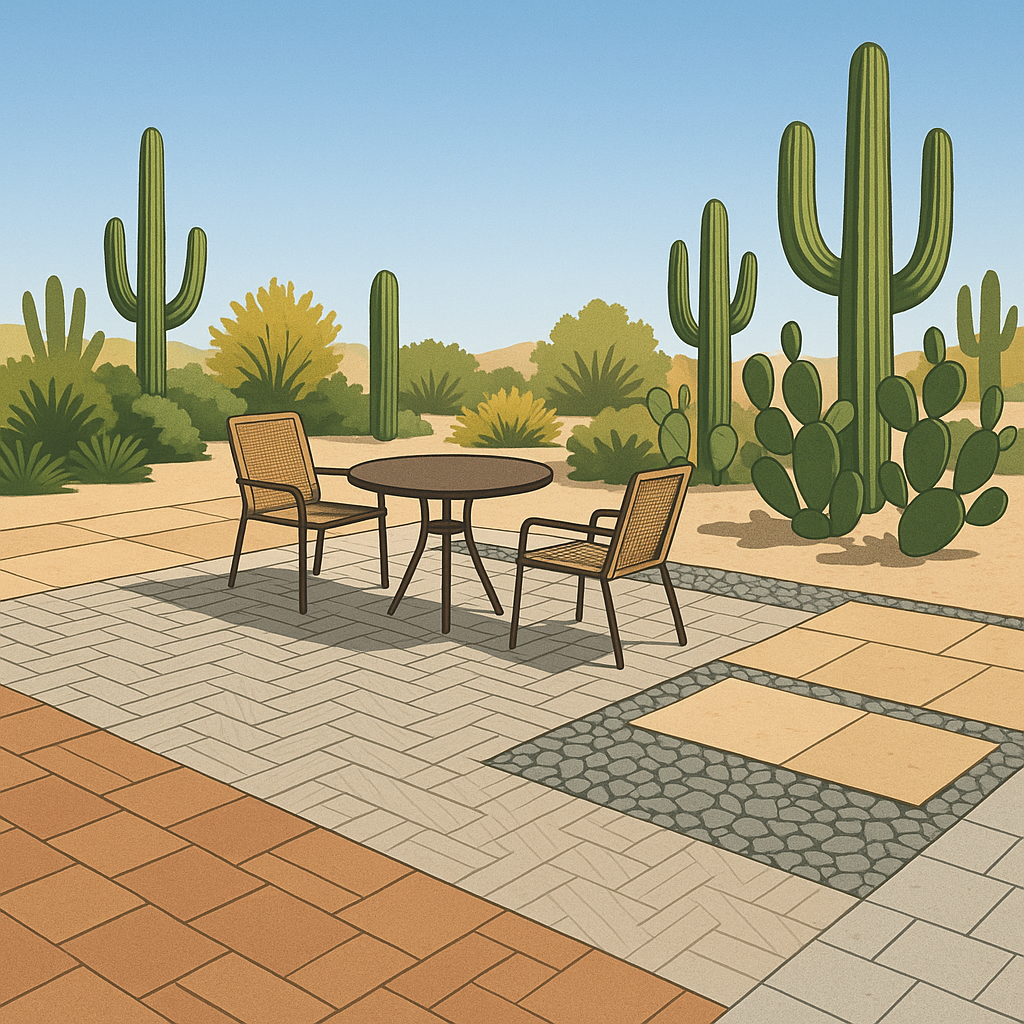
When designing a hardscape in a desert environment, selecting the right paver patterns and materials is essential for both durability and aesthetics. Here, we explore the seven best paver options that stand up to the challenges of desert landscapes while enhancing their beauty.
- Durable materials are essential for desert hardscapes.
- Patterns like herringbone provide visual interest.
- Low-maintenance options are ideal for arid climates.
- Consider color choices that reflect heat.
- Proper installation ensures longevity and stability.
1. Herringbone Pattern
The herringbone pattern is a popular choice for its dynamic appearance and strength. This interlocking design not only enhances traction but also adds visual appeal. It’s ideal for patios and walkways that experience heavy foot traffic. However, installation can be complex, requiring precise cuts and alignment.
2. Basketweave Pattern
The basketweave pattern offers a classic look with its alternating rectangular and square pavers. This design is particularly suited for driveways and larger areas, as it creates a cohesive and inviting appearance. One caveat is that it may require more maintenance to keep the joints filled with sand.
3. Running Bond Pattern
The running bond pattern is one of the simplest and most straightforward options. It consists of rectangular pavers laid in a linear fashion, making it easy to install. This pattern works well for pathways and patios but may lack the visual flair of more intricate designs.
4. Cobblestone Pavers
Cobblestone pavers provide a rustic charm that’s perfect for desert landscapes. Their natural stone appearance blends beautifully with arid surroundings. While they are durable, the uneven surfaces can be a challenge for some uses; thus, they are best for decorative areas rather than high-traffic zones.
5. Large Format Pavers
Large format pavers create a modern and sleek look, making them ideal for contemporary desert designs. They reduce the number of joints, minimizing maintenance and enhancing aesthetics. However, their weight may require professional installation to ensure stability.
6. Travertine Pavers
Travertine pavers are favored for their natural beauty and heat resistance. Their light colors reflect sunlight, helping to keep areas cooler. These pavers are best for patios and pool surrounds but can be more expensive than other options.
7. Concrete Pavers
Concrete pavers are versatile and cost-effective, available in various colors and patterns. They can mimic natural stone while offering durability and ease of installation. The downside is that they may absorb heat, making the surface hot underfoot during peak sun hours.
How to Choose the Right Paver Pattern
Choosing the right paver pattern involves considering your landscape’s function, aesthetic goals, and climate challenges. Evaluate the durability of materials, maintenance needs, and how well they integrate with existing landscape elements. With the right selection, your desert hardscape can be both functional and beautiful.
FAQ
What is the best paver material for desert climates?
The best paver materials for desert climates include concrete, travertine, and clay bricks. These materials are durable, heat-resistant, and can withstand the extreme temperature fluctuations typical of desert environments.
How do I choose the right paver pattern?
Choosing the right paver pattern depends on your design goals, space size, and function. Patterns like herringbone or basketweave add visual interest, while running bond is great for larger areas, creating a seamless look.
Are pavers suitable for desert landscaping?
Yes, pavers are highly suitable for desert landscaping. They provide a stable surface, reduce erosion, and can be designed to complement the surrounding desert flora, enhancing the overall aesthetic.
What maintenance do pavers require in desert areas?
Pavers in desert areas require minimal maintenance, mainly periodic cleaning to remove dust and debris. Sealing can also help maintain their color and prevent staining from the sun’s intense rays.
Can I install pavers myself for my desert landscape?
Yes, you can install pavers yourself, but it requires careful planning and preparation. Ensure you have the right tools, a solid foundation, and proper drainage to prevent shifting due to heat and dryness.